
Introduction
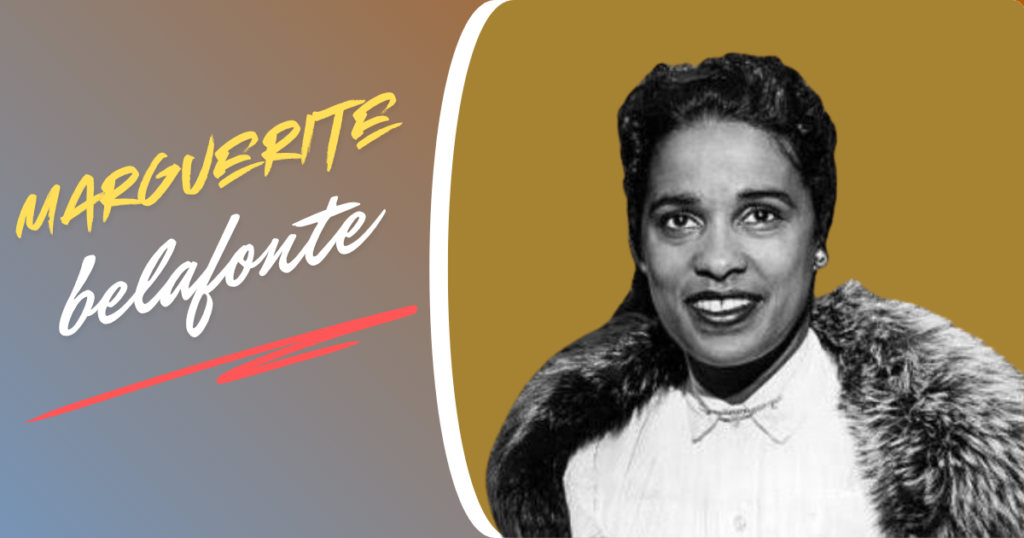
Marguerite Belafonte occupies an unusual place in American cultural and civil-rights history. She was connected to one of the best-known entertainers and activists of the 20th century, but her own career included education, journalism, radio, fundraising, and organizational work for the NAACP.
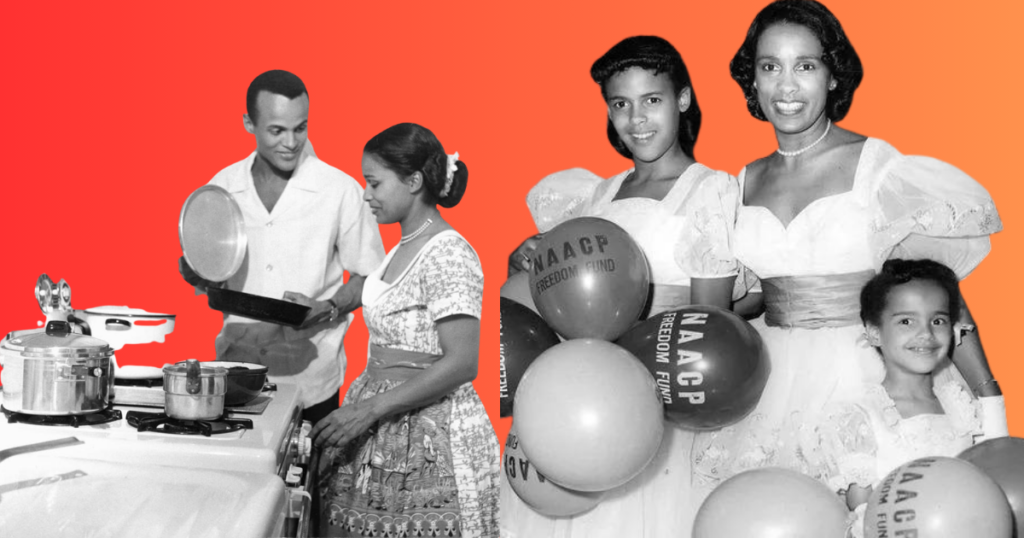
Her importance is especially visible in the records surrounding the NAACP’s Fight for Freedom Fund. During the campaign period from 1958 to 1960, she worked with Jackie Robinson and Duke Ellington in a national fundraising effort designed to support the organization’s civil-rights activities. She also participated in Fashions for Freedom, a benefit program that used public events to raise money for the movement.
The historical record therefore presents Marguerite as more than a celebrity spouse. She was a working professional and civil-rights fundraiser who operated at the intersection of education, media, entertainment, and activism.
Who is Marguerite Belafonte?
Marguerite Belafonte was an American educator, journalist, radio commentator, civil-rights fundraiser, and occasional actress whose life extended well beyond her connection to entertainer and activist Harry Belafonte. Born Frances Marguerite Byrd, she built a professional identity through education, child psychology, journalism, broadcasting, and public-service work.
She became particularly notable during the late 1950s and early 1960s for her involvement with the National Association for the Advancement of Colored People (NAACP). She served as a co-chair of the organization’s Fight for Freedom Fund campaign alongside prominent figures including Jackie Robinson and Duke Ellington, participated in nationwide fundraising activities, and later joined the NAACP staff as a special projects director.
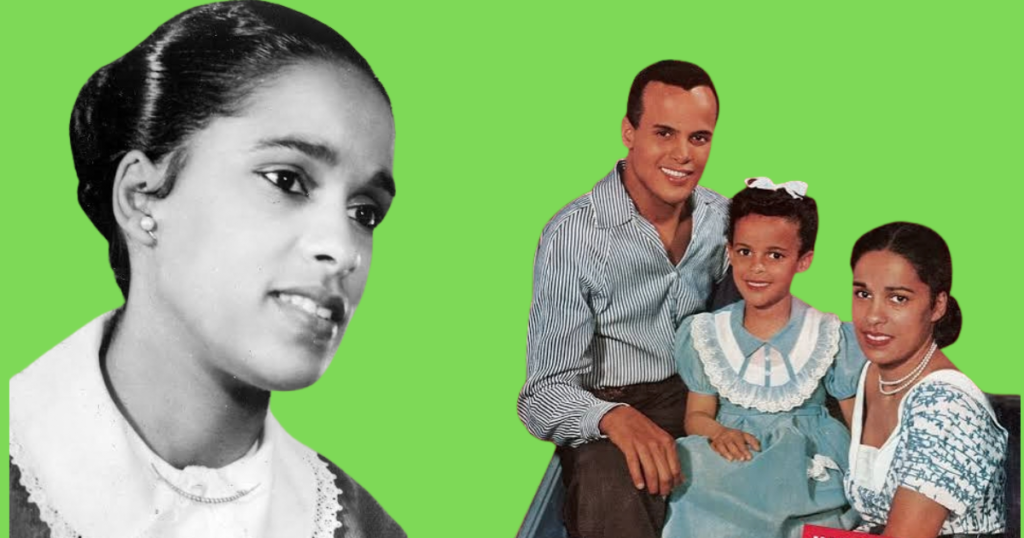
Marguerite is also remembered as Harry Belafonte’s first wife and the mother of Adrienne Belafonte Biesemeyer and Shari Belafonte. Yet reducing her life to that relationship overlooks one of the most interesting aspects of her biography: she was professionally active in several fields and participated directly in organized civil-rights fundraising during an important period in American history.
Marguerite Belafonte Quick Facts
| Category | Details |
|---|---|
| Full name | Frances Marguerite Byrd |
| Known as | Marguerite Belafonte, Marguerite Byrd |
| Reported birth date | October 12, 1923 |
| Reported birthplace | Washington, D.C. |
| Reported death date | February 15, 1998 |
| Reported age at death | 74 |
| Nationality | American |
| Profession | Educator, journalist/editor, radio commentator, civil-rights fundraiser, NAACP staff member, occasional actress |
| Education | Hampton Institute; psychology/child-psychology studies associated with New York University |
| Former husband | Harry Belafonte |
| Marriage | 1948–1957 |
| Children | Adrienne Belafonte Biesemeyer and Shari Belafonte |
| Major organization | NAACP |
| Major campaign | Fight for Freedom Fund |
| Fundraising program | Fashions for Freedom |
| NAACP position | Special projects director |
| Film credit | Night of the Quarter Moon (1959) |
| Height | 5 feet and 6 inches |
| Weight | 58 kg Status |
| Religion | Roman Catholic |
| Net worth | Approximately $800,000 (estimated) |
| Cause of death | heart ailment |
Also Read:mj-fresh
Personal Details
Full Name
Marguerite Belafonte was born Frances Marguerite Byrd. Historical and biographical references also use Marguerite Byrd when discussing her life before and during her marriage to Harry Belafonte.
Because different sources use Marguerite Belafonte, Marguerite Byrd, and Frances Marguerite Byrd, these names should be understood as referring to the same person rather than separate individuals.
Nickname and Known Names
The best-documented forms are:
- Marguerite Belafonte
- Marguerite Byrd
- Frances Marguerite Byrd
There is no reliably documented informal nickname that should be presented as an established fact.
Date of Birth
Marguerite Belafonte is widely reported as having been born on October 12, 1923.
Because the available evidence is stronger for her professional history than for her underlying civil records, the date is best described as a reported biographical date rather than supported by an independently cited birth certificate.
Birthplace
Biographical databases report Washington, D.C. as her birthplace.
Age
Based on the commonly reported October 12, 1923 birth date and February 15, 1998 death date, Marguerite was 77 years old when she died.
Height, Weight, and Body Measurements
- height 5 feet 6 inches
- Weight 58 kg Status
- body measurements
Profession
Marguerite’s professional activities included several fields. She was associated with:
- Education
- Child psychology
- Journalism and editing
- Radio commentary
- Civil-rights fundraising
- NAACP special projects
- Acting
Also Read:ann-archambault
Nationality
Marguerite Belafonte was American.
Religion
A reliable public source establishing her religious affiliation has devout Catholic.
Zodiac Sign
If the reported October 12 birth date is correct, her zodiac sign would be Libra. This is a calendar-based classification rather than an independently documented aspect of her biography.
Ethnicity
Historical accounts place Marguerite within the African American/Black American experience. Her professional and civic work also unfolded during the period when Black Americans were organizing against racial discrimination and segregation.
Legacy
Marguerite’s strongest documented legacy rests on her civil-rights fundraising and professional work, particularly her involvement with the NAACP’s Fight for Freedom Fund and her later position as special projects director.
Net Worth
Marguerite Belafonte’s personal Net Worth: Approximately $800,000 (estimated).
It is important not to use Harry Belafonte’s estimated $30 million net worth as Marguerite’s personal net worth; that figure refers to her former husband.
Marital Status
Marguerite was married to Harry Belafonte from 1948 until their divorce in 1957. Historical reference material gives June 18, 1948, as their marriage date and February 28, 1957, as the divorce date.
Early Life and Background
Marguerite’s early life is less extensively documented than her later professional activities. Available historical sources place her educational path within the Black American educational institutions and professional networks of the 1940s.
One of the most important documented moments came in 1944, when she was a student at Hampton Institute. During this period she met Harry Belafonte, who was serving in the U.S. Navy. The Library of Congress identifies their meeting as taking place while Marguerite was studying at Hampton and Belafonte was stationed in Virginia.
That meeting eventually led to marriage, but Marguerite’s later career shows that her interests were not limited to family life. Her background in psychology and education developed into professional work involving children and communication.
Also Read:rai-blue
Education
Hampton Institute
Marguerite was a student at Hampton Institute, historically one of the prominent institutions serving African American students.
Her time at Hampton is especially significant because it connects directly with the beginning of her relationship with Harry Belafonte. According to the Library of Congress, the two met in 1944 while Marguerite was a student there.
The institution is now known as Hampton University, although “Hampton Institute” is the historically appropriate name for the period when Marguerite attended.
Psychology and Child Development
Marguerite’s educational and professional background included psychology and child psychology.
Historical material preserved through the Smithsonian identifies her with child-psychology teaching at New York University.
New York University
Marguerite is associated with New York University through psychology studies and teaching work. Historical references describe her as a child-psychology teacher there.
Some later secondary accounts also report that she studied at the Sorbonne in Paris and the University of Heidelberg.
Career Journey
Education and Child Psychology
One of Marguerite’s earliest professional identities was connected to education and child psychology.
Historical material identifies her as a teacher of child psychology at New York University.
This career path provides an important counterpoint to the common image of her as simply the wife of a famous entertainer.
Her educational work also helps explain the breadth of her later public activities. Communication, teaching, writing, and public engagement became recurring elements of her career.
Journalism and the New York Amsterdam News
During the 1950s, Marguerite was associated with the New York Amsterdam News, where she worked as a women’s editor according to historical biographical accounts.
The role placed her within an important Black newspaper environment.
The New York Amsterdam News was more than a conventional publication. Black newspapers played a major role in documenting racial discrimination, highlighting Black achievements, discussing community concerns, and providing a platform for political and cultural discussion.
Marguerite’s work in this setting therefore formed part of a broader professional network connecting journalism, community affairs, culture, and social activism.
Also Read:becky-crocker
Radio Commentary
Marguerite also worked as a radio commentator during the 1950s.
Radio offered public figures an important way to reach audiences before the dominance of modern digital media. Her work in broadcasting added another dimension to her career as a communicator.
Her progression from education to journalism and radio also shows a recurring theme in her professional life: public communication.
NAACP Fight for Freedom Fund
Marguerite’s most significant documented civil-rights work came through the NAACP Fight for Freedom Fund.
The Library of Congress records her as a co-chair of the campaign from 1958 to 1960, working alongside prominent figures including Jackie Robinson and Duke Ellington. The campaign sought to raise substantial financial support for the NAACP’s civil-rights activities, with a reported annual target of $1 million.
This role was important because civil-rights organizations required not only public speakers and demonstrators but also money, donors, publicity, events, travel, administration, and sustained organizational work.
Marguerite’s contribution belonged to this less visible but essential side of movement-building.
Fashions for Freedom
One of the most distinctive elements of Marguerite’s fundraising work was Fashions for Freedom.
The program used fashion-related public events as fundraising occasions connected to the NAACP’s broader Freedom Fund campaign. Marguerite participated in organizing and presenting these events as part of her national fundraising activities.
The idea illustrates how civil-rights fundraising could operate across cultural spaces. Rather than relying only on traditional political meetings, campaigns could use entertainment, fashion, celebrity participation, public speaking, and social events to attract audiences and donors.
NAACP archival material contains multiple records concerning Marguerite’s tours and Fashions for Freedom activities, providing evidence that this was not simply a single promotional appearance but part of a broader fundraising effort.
Partnership With Jackie Robinson and Duke Ellington
Marguerite’s work on the Fight for Freedom Fund placed her alongside two highly recognizable Black American figures:
- Jackie Robinson, the pioneering Major League Baseball player and civil-rights advocate
- Duke Ellington, the internationally influential jazz composer and bandleader
Their involvement demonstrates the campaign’s strategy of bringing together figures from different areas of Black American public life.
Marguerite’s inclusion in this leadership structure is significant because it shows her operating within a national network that linked civil rights, entertainment, journalism, sports, and fundraising.
Joining the NAACP Staff
In September 1960, Marguerite joined the NAACP staff as special projects director, according to the Library of Congress.
This represented a progression from campaign fundraising into a formal organizational role.
The position also provides an important distinction between being a celebrity-associated fundraiser and being an employee working within a major civil-rights organization.
National Fundraising Tours
NAACP archival records provide further evidence of Marguerite’s continuing activity after her appointment.
Records document:
- fundraising tours
- speaking engagements
- travel
- campaign programs
- expenses
- contributions
- Fashions for Freedom activities
Material covering 1961 and 1962 indicates that her work continued beyond the initial 1958–1960 campaign period.
This archival evidence makes the NAACP period one of the strongest areas for understanding her professional legacy.
Acting Career
Marguerite also had a small film role.
Night of the Quarter Moon
In 1959, Marguerite appeared in the film Night of the Quarter Moon, directed by Hugo Haas and distributed by Metro-Goldwyn-Mayer.
Her credited role was Hostess.
The appearance should be understood as an occasional acting credit rather than evidence of a substantial film career. Her better-documented professional contributions were in education, journalism, broadcasting, and civil-rights fundraising.
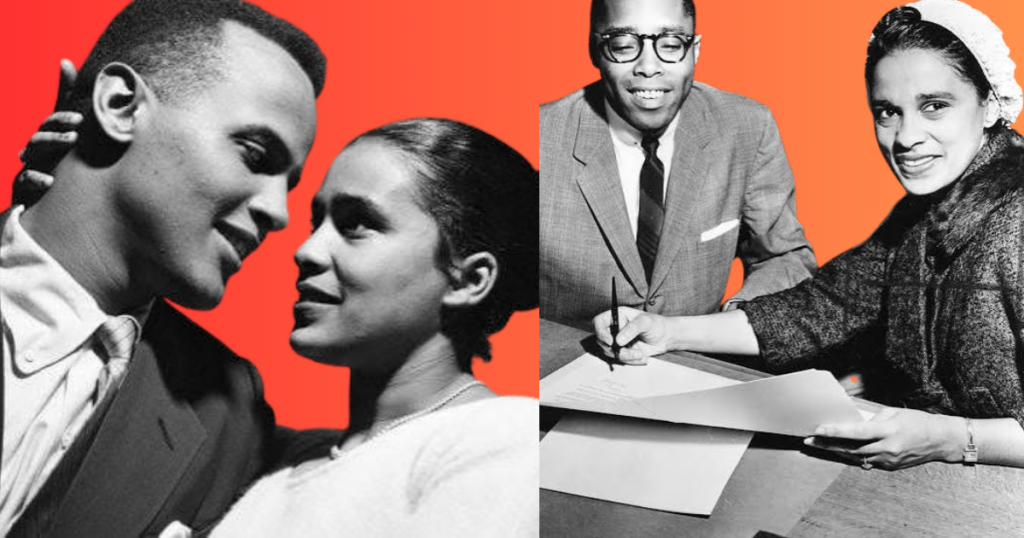
Marguerite Belafonte and Harry Belafonte
How They Met
Marguerite met Harry Belafonte in 1944, when she was a student at Hampton Institute and he was serving in the U.S. Navy.
Their relationship developed during the years before Belafonte became an internationally recognized entertainer and civil-rights activist.
Marriage
Marguerite and Harry Belafonte married on June 18, 1948, according to established biographical reference material.
Their marriage occurred before Harry Belafonte’s greatest commercial success as a singer and actor.
Children
The couple had two daughters:
- Adrienne Belafonte Biesemeyer
- Shari Belafonte
Their daughters later developed their own public identities and careers.
Divorce
Marguerite and Harry Belafonte divorced on February 28, 1957, according to biographical reference sources.
Some later accounts discuss differences in outlook and lifestyle when describing the end of their marriage. However, there is insufficient reliable evidence to reduce the divorce to a single cause or to present unverified personal claims as established fact.
Marguerite Belafonte’s Children
Adrienne Belafonte Biesemeyer is Marguerite’s older daughter with Harry Belafonte.
Adrienne later became involved in humanitarian and civil-rights-related work, continuing a family connection to public service.
She has also been identified publicly as the mother of Rachel Blue and Brian Blue in family biographies.
Shari Belafonte
Shari Belafonte is Marguerite’s younger daughter.
Born on September 22, 1954, Shari became known as an actress, singer, and model. She is particularly associated with television, including the series Hotel.
Shari’s later career gave Marguerite’s family another connection to American entertainment, although Marguerite herself had a much broader professional background.
Personal Life and Family
Marguerite’s personal life is most extensively documented through her marriage to Harry Belafonte and their two daughters.
Her family connection is historically important because Harry Belafonte became a major figure in both entertainment and the American civil-rights movement. Yet Marguerite’s own work overlapped with those worlds independently.
Her NAACP fundraising career is especially notable because it means her connection to civil-rights history was not simply through her former husband. She herself held an organizational role in the movement’s fundraising infrastructure.
Beyond her immediate family, publicly reliable sources do not provide enough information to construct a detailed genealogy of her parents, siblings, grandparents, or extended relatives.
Relationships
Marguerite’s best-documented relationship was her marriage to Harry Belafonte.
There is no need to rely on celebrity gossip or unsupported accounts of additional relationships. The available evidence clearly establishes:
- Harry Belafonte as her husband
- their 1948 marriage
- their two daughters
- their 1957 divorce
Business Ventures
There is no reliable evidence that Marguerite Belafonte founded or operated a major commercial company or brand.
Similarly, there is no reliable basis for attributing:
- major business ownership
- investment portfolios
- personal brands
- corporations
- large commercial ventures
to Marguerite.
Philanthropy and Civil-Rights Work
Marguerite’s public-service record is most clearly associated with the NAACP.
Fight for Freedom Fund
Her role as a co-chair of the Fight for Freedom Fund campaign from 1958 to 1960 placed her at the center of a major fundraising effort.
Fashions for Freedom
Fashions for Freedom became one of the distinctive fundraising mechanisms associated with her work. It connected fashion and public events with civil-rights fundraising.
Special Projects Director
Her appointment as special projects director in 1960 transformed her involvement from campaign participation into a formal NAACP staff position.
Why This Work Matters
Civil-rights history is often remembered through famous speeches, protests, court cases, and legislation. Fundraising is less visible but was essential to sustaining organizations.
Marguerite’s work provides a useful example of this infrastructure:
public visibility → fundraising events → national travel → donor engagement → organizational resources
Her career therefore illustrates an important but sometimes overlooked part of the civil-rights movement.
Challenges and Public Controversies
No major verified legal controversy involving Marguerite Belafonte was identified in the reliable sources reviewed.
The most significant personal transition documented in her public biography was her 1957 divorce from Harry Belafonte.
Later accounts describe differences in lifestyle and outlook between the couple.
The more historically meaningful challenge surrounding her career was the broader environment in which Black women worked during the mid-20th century. Her professional path through education, journalism, broadcasting, and civil-rights organizing took place during a period of significant racial and gender barriers in American institutions.
Death and Later Life
Marguerite Belafonte is reported to have died on February 15, 1998, at the age of 74.
Biographical databases report Washington, D.C., as her place of death.
A reliable authoritative source establishing a specific cause of death has heart ailment. For that reason, no cause should be presented as fact.
The public record about her later decades is considerably thinner than the documentation surrounding her NAACP work in the late 1950s and early 1960s.
Major Achievements
Marguerite Belafonte’s documented accomplishments include:
- Building a professional background in education and child psychology
- Working in Black journalism
- Working as a radio commentator
- Becoming a national NAACP fundraiser
- Co-chairing the Fight for Freedom Fund
- Working alongside Jackie Robinson and Duke Ellington
- Participating in Fashions for Freedom
- Joining the NAACP as special projects director
- Continuing fundraising and speaking activities documented in NAACP archives
- Appearing in the 1959 film Night of the Quarter Moon
Her greatest historical contribution is arguably her civil-rights fundraising and organizational work, because that portion of her career is supported by institutional and archival evidence rather than simply later celebrity biographies.
Interesting Facts About Marguerite Belafonte
Her birth name was Frances Marguerite Byrd
Many readers know her only as Marguerite Belafonte, but historical sources identify her as Frances Marguerite Byrd.
She met Harry Belafonte before he became a major entertainer
Their meeting took place in 1944, before Belafonte’s rise to international fame.
She had an education-focused career
Marguerite’s professional history included child psychology and education, an aspect frequently overshadowed by her marriage to Harry Belafonte.
She worked in Black journalism
Her reported work as a women’s editor at the New York Amsterdam News connected her with one of the important Black newspapers of the period.
She worked in radio
Her career was not confined to print journalism; she also worked as a radio commentator.
She worked with Jackie Robinson
Marguerite co-chaired the NAACP Fight for Freedom Fund campaign alongside prominent public figures including Jackie Robinson.
Duke Ellington was another campaign colleague
Her fundraising work also placed her alongside legendary jazz musician Duke Ellington.
She was involved in Fashions for Freedom
Her NAACP work used fashion events as part of a broader fundraising strategy.
She joined the NAACP staff
In 1960, she became the organization’s special projects director.
She appeared in a Hollywood film
She had a credited role as a hostess in Night of the Quarter Moon in 1959.
Legacy and Influence
Marguerite Belafonte’s legacy is best understood through several overlapping parts of her life.
Civil-Rights Fundraising
Her NAACP career demonstrates the importance of fundraising as a form of civil-rights work.
The Fight for Freedom Fund required national organization, public outreach, events, travel, and donor participation. Marguerite worked directly within that infrastructure.
Professional Identity
Her career crossed several fields:
education → journalism → radio → fundraising → civil-rights administration
That range makes her biography particularly useful for understanding the many professional paths available to Black women who worked in public life during the mid-20th century.
Connection to Black Media
Her work in journalism and radio placed her within institutions that helped Black Americans tell their own stories and communicate community concerns.
Connection to Entertainment
Through Harry Belafonte and her own brief film appearance, Marguerite also had a connection to American entertainment.
But her documented record suggests that her public-service work deserves at least as much attention as her celebrity connection.
Family Legacy
Her daughters, Adrienne and Shari, went on to develop their own public careers. Shari in particular became a recognizable actress, singer, and model.
Marguerite’s family therefore remained connected to both entertainment and public service across subsequent generations.
Why Marguerite Belafonte Matters
Marguerite Belafonte’s biography illustrates how historical figures can disappear behind the fame of the people closest to them.
Harry Belafonte’s extraordinary public career naturally dominates many accounts of the family. Yet Marguerite had her own documented professional history. She worked in education, journalism and broadcasting before becoming involved in national civil-rights fundraising.
Her NAACP work is particularly important because it moves her from the category of “famous person’s wife” into the historical record as a participant in organized civil-rights activity.
The archival evidence concerning her tours, fundraising, speaking engagements, and Fashions for Freedom work reinforces this distinction.
FAQs
Marguerite Belafonte, born Frances Marguerite Byrd, was an American educator, journalist, radio commentator, civil-rights fundraiser, and NAACP staff member. She was also the first wife of Harry Belafonte and the mother of Adrienne and Shari Belafonte.
Her birth name was Frances Marguerite Byrd. She was also commonly identified as Marguerite Byrd.
Marguerite Byrd, later known as Marguerite Belafonte, was Harry Belafonte’s first wife. They married in 1948 and divorced in 1957.
She is widely reported to have been born on October 12, 1923.
Marguerite Belafonte is reported to have died on February 15, 1998, at age 74.
She and Harry Belafonte had two daughters: Adrienne Belafonte Biesemeyer and Shari Belafonte.
Her professional activities included education, child psychology, journalism, radio commentary, civil-rights fundraising, and NAACP special-project work.
Yes. She was a co-chair of the Fight for Freedom Fund campaign from 1958 to 1960 and joined the NAACP staff as special projects director in September 1960.
Fashions for Freedom was a fundraising initiative associated with the NAACP’s civil-rights fundraising activities. Marguerite participated in presenting and organizing such events as part of national fundraising work.
Yes. She had a credited role as a hostess in the 1959 film Night of the Quarter Moon.
She studied at Hampton Institute, where she met Harry Belafonte in 1944. Historical sources also connect her with psychology and child-psychology studies and teaching at New York University.
Her personal net worth Approximately $800,000 (estimated). Estimates published without financial documentation should not be treated as facts.
Conclusion
Marguerite Belafonte was much more than Harry Belafonte’s first wife. Born Frances Marguerite Byrd, she developed a professional life that crossed education, child psychology, journalism, radio, entertainment, and civil-rights organizing.
Her most significant documented contribution came through the NAACP, where she helped lead the Fight for Freedom Fund campaign, participated in Fashions for Freedom fundraising events, worked alongside figures such as Jackie Robinson and Duke Ellington, and eventually became the organization’s special projects director.
Her marriage to Harry Belafonte and motherhood of Adrienne and Shari remain important parts of her story, but they should not eclipse her own professional record.
The strongest evidence about Marguerite’s life ultimately points to a woman who combined education, communication, public engagement, and civil-rights fundraising during a transformative period in American history. Her story is valuable precisely because it reveals the work that happened behind the better-known names of the civil-rights era—and because it restores an independent identity to a woman too often remembered only through her famous former husband.